
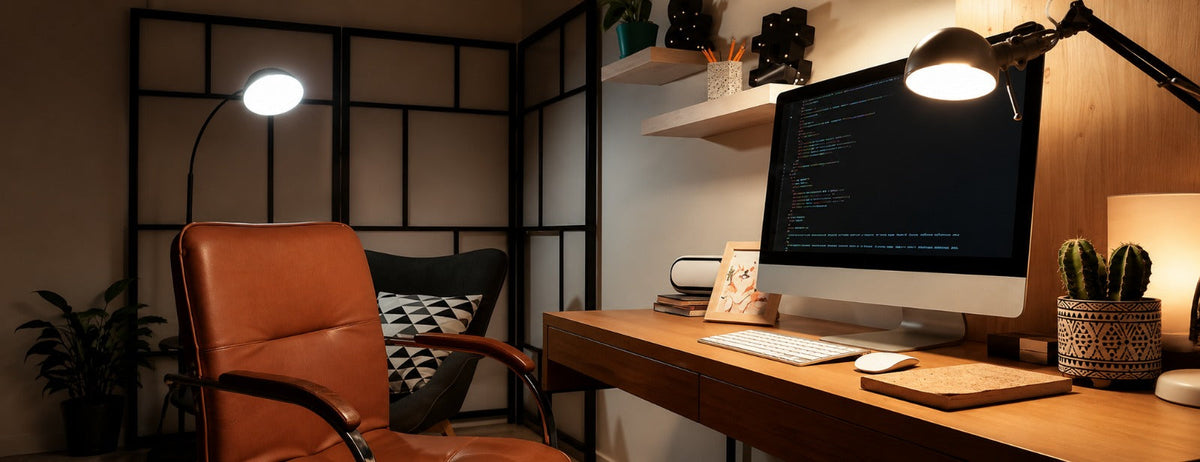
Here's a question worth sitting with: what if your stalled
productivity has nothing to do with discipline? What if it's your physical
surroundings doing the damage? Most solopreneurs pour energy into business
processes, marketing funnels, and landing clients — yet completely ignore how
their workspace is quietly sabotaging them. The space you work from daily
shapes mental clarity, focus, and whether this whole solo venture is even
sustainable long-term. Getting a handle on the organizational mistakes eating
into your output? That's where real gains hide.
1. Failing to Separate Work and Personal Zones
This one causes more damage than people want to admit. When
your desk is wedged in your bedroom corner, or your laptop permanently occupies
the kitchen counter, your brain never fully shifts into work mode. Relaxation
and productivity end up fighting over the same turf — physically and mentally.
Conflicting environmental signals make it nearly impossible to compartmentalize
tasks. Even a four-by-four-foot dedicated zone changes everything. That
boundary is a cue. Sit down inside it, and your brain starts concentrating
within minutes.
2. Neglecting Ergonomics and Physical Comfort
Solopreneurs consistently underestimate this. A chair that
punishes your lower back, a monitor sitting too low, a desk at the wrong height
— your body absorbs all of it. Two or three hours in, your cognitive resources
have quietly migrated away from actual work toward managing aches. Decision-making
slows. Fatigue sets in faster than you'd expect. And that's just the short-term
cost. Chronic neck tension, repetitive strain — these force unproductive days
off, sometimes many of them. A proper chair, an adjustable desk, and correct
monitor placement cost far less than a recurring cycle of pain and recovery.
3. Creating Too Many Visual Distractions
Look around your desk right now. Papers everywhere? Sticky
notes layered over other sticky notes? Old mugs, random cables, miscellaneous
clutter? Every item in your visual field is pulling at your attention — subtly,
constantly. Research on attention confirms it: multiple competing visual
elements reduce how deeply you can concentrate, which means complex tasks drag
on and demand more mental effort than they should. Smart solopreneurs run a
minimalist desk policy. Only essential items stay visible during work blocks. A
clear surface isn't aesthetic preference — it's a focus signal your brain
actually responds to.
4. Overlooking Lighting and Environmental Factors
Dim overhead lighting makes your eyes strain harder. That
strain becomes fatigue. Fatigue becomes an afternoon crash that feels like a
willpower problem but isn't. Temperature matters too — a cold room or stale air
can trigger restlessness that masquerades as difficulty concentrating.
Humidity, air quality, natural light proximity — these aren't minor details. A
desk lamp with adjustable brightness, a spot near a window when you can manage
it, and decent ventilation: together, they keep your body comfortable enough
that your mind stays where you need it.
5. Neglecting Tools and Systems for Organization
Even a beautifully arranged desk fails you if your digital
and administrative systems are a mess. No clear filing structure, no document
templates, no project management approach — and you're burning time hunting
down information or rebuilding work you've already done. Tools like branded
promotional items from suppliers such as Coggins Promo — calendars, notepads,
desk organizers — serve real functional purposes while reinforcing a
professional mindset and keeping daily systems consistent.
When sourcing and managing branded supplies efficiently, a detailed online company store
provides a centralized platform for ordering and organizing exactly the tools
that keep a workspace running smoothly. Physical organization paired with
supportive tools creates a compounding effect — resources surface faster,
momentum holds longer. But none of that matters if your digital environment
stays chaotic. A cluttered desktop and an overflowing inbox will undo every
physical improvement you make.
Conclusion
It's never just one mistake. It's a cluster of overlooked
details that pile up into real, measurable losses. Dedicated work zones. Proper
ergonomics. Fewer visual distractions. Better lighting. Organized systems.
Together, these don't just make your workspace feel better — they make focus
feel natural instead of like something you have to fight for. Your workspace
isn't a luxury. It's foundational. Every hour you put into optimizing it pays
back daily, compounding over months and years of work. Small environmental
shifts can drive surprisingly significant output gains — and they're often far
easier to make than you'd expect.